A Digital Sunset Ritual: Unplugging for Better Rest
August 26, 2026
A Green Candle Money Ritual for New Beginnings
August 26, 2026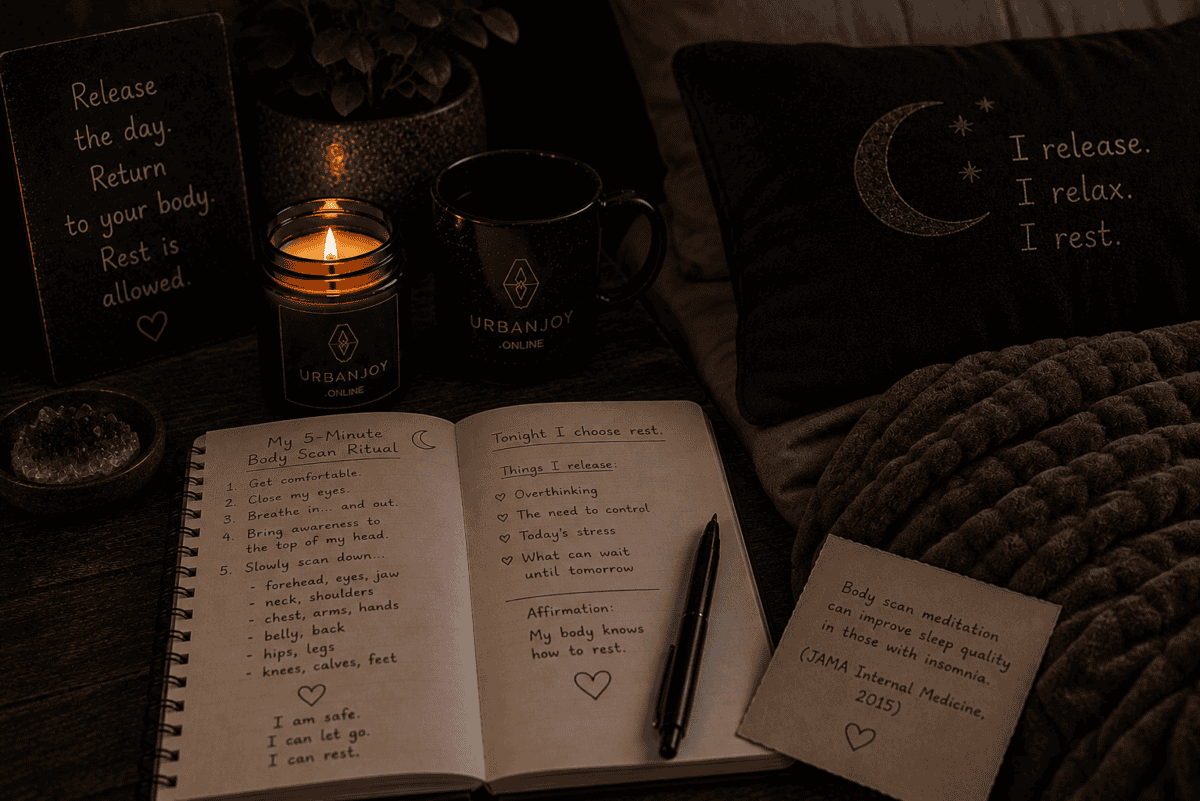
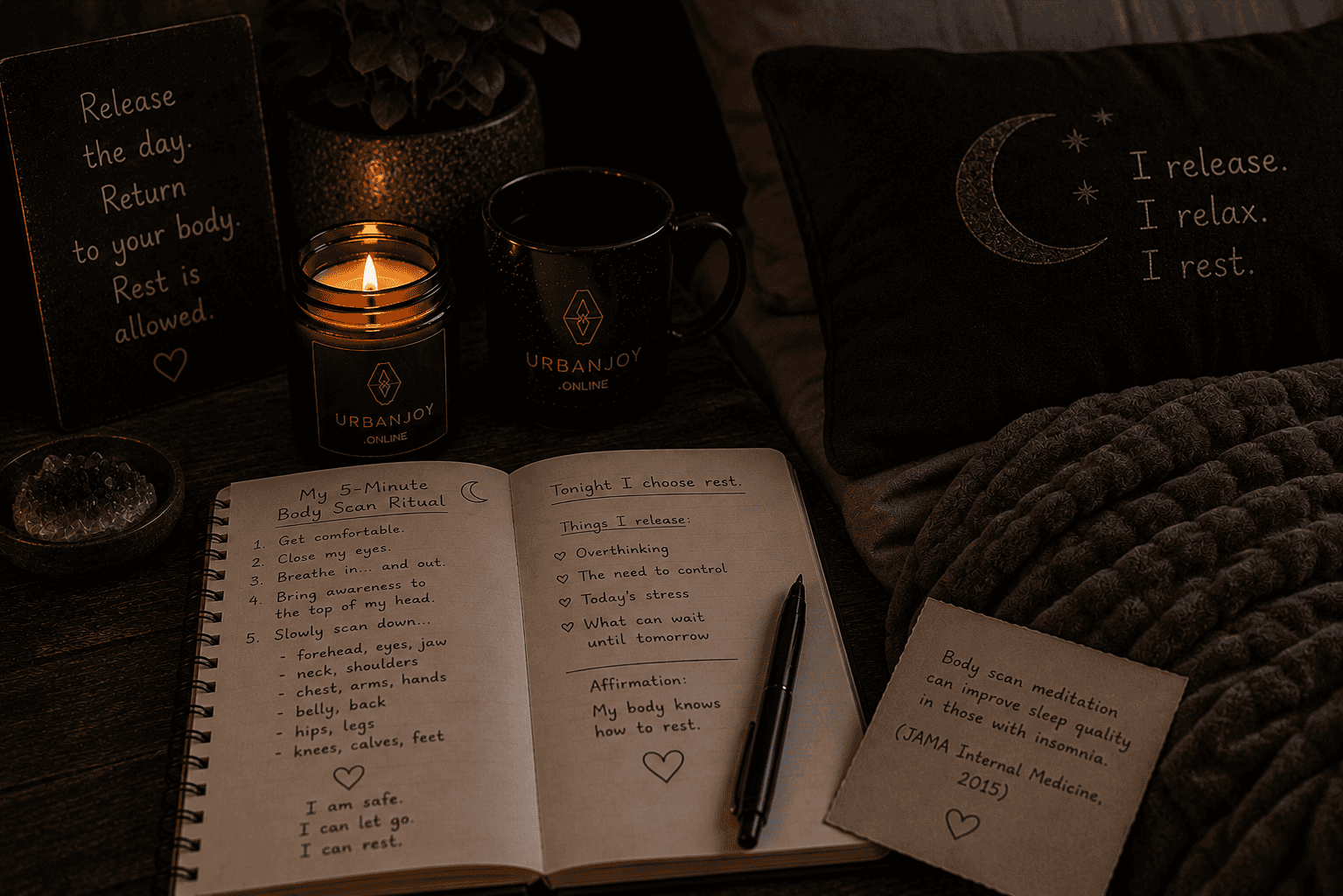
My body scan ritual for sleep came out of a stretch of insomnia that had gone on long enough to start scaring me. I’d lie there, exhausted but wired, running through the same handful of worries on a loop, watching the clock tick past midnight and then one and then two. A friend, tired of hearing about it, sent me a basic body scan script and told me to just try it before dismissing it as too simple to work.
The practice itself takes about five minutes: lying flat, eyes closed, bringing slow attention to each part of the body in sequence — feet, calves, knees, working upward — noticing tension without necessarily trying to force it away, just registering it and moving on. No visualization, no counting, just a methodical, unhurried pass through the whole body.
Why It Worked When Nothing Else Had
What made this different from other things I’d tried was that it gave my mind an actual job to do that wasn’t worrying. Trying to “just relax” or “stop thinking” had never worked, because there was nothing to replace the worrying with — an empty instruction leaves plenty of room for anxious thoughts to rush back in. The body scan filled that space with something specific and sequential to pay attention to instead.
I also noticed, somewhere around the third or fourth night of doing this, that I rarely made it all the way to my head before falling asleep. That became, oddly, the marker of success — not finishing the scan, but getting far enough into it that my body had already started letting go before my mind caught up.
The Research Behind Why This Works
Body scan practices are a well-established component of mindfulness-based approaches to insomnia, and they work in part by interrupting the kind of cognitive arousal — racing thoughts, worry loops — that keeps the body from settling into sleep, redirecting attention to physical sensation instead (source). Knowing there was research behind it made it easier to keep trying on nights when it felt like it wasn’t working yet.
This has become a natural pairing with my breathwork ritual for anxious nights — on the worst nights I’ll do both, breath first to calm the initial spike, body scan after to actually ease into sleep. On calmer nights, I still lean on my lavender evening ritual for peaceful rest as the gentler option. Between the three, I’ve finally built a toolkit that meets me wherever a given night actually is, instead of hoping one single ritual will work every time.
Continue Your Peace & Rest Practice
Find more calming, sleep-friendly rituals in the Peace & Rest hub, or try this weighted blanket and breathwork ritual. Calming crystals can be a nice addition to a wind-down routine — the Crystal Meanings & Uses Guide covers stones traditionally used for rest and relaxation. These rituals are a personal practice, not medical treatment; for evidence-based relaxation techniques, see the NIH’s overview of relaxation techniques for health.