
What Is Modern Witchcraft? A Beginner’s Guide to Building Your Own Practice
August 12, 2026
Candle Magic for Beginners: A Simple Guide to Getting Started
August 13, 2026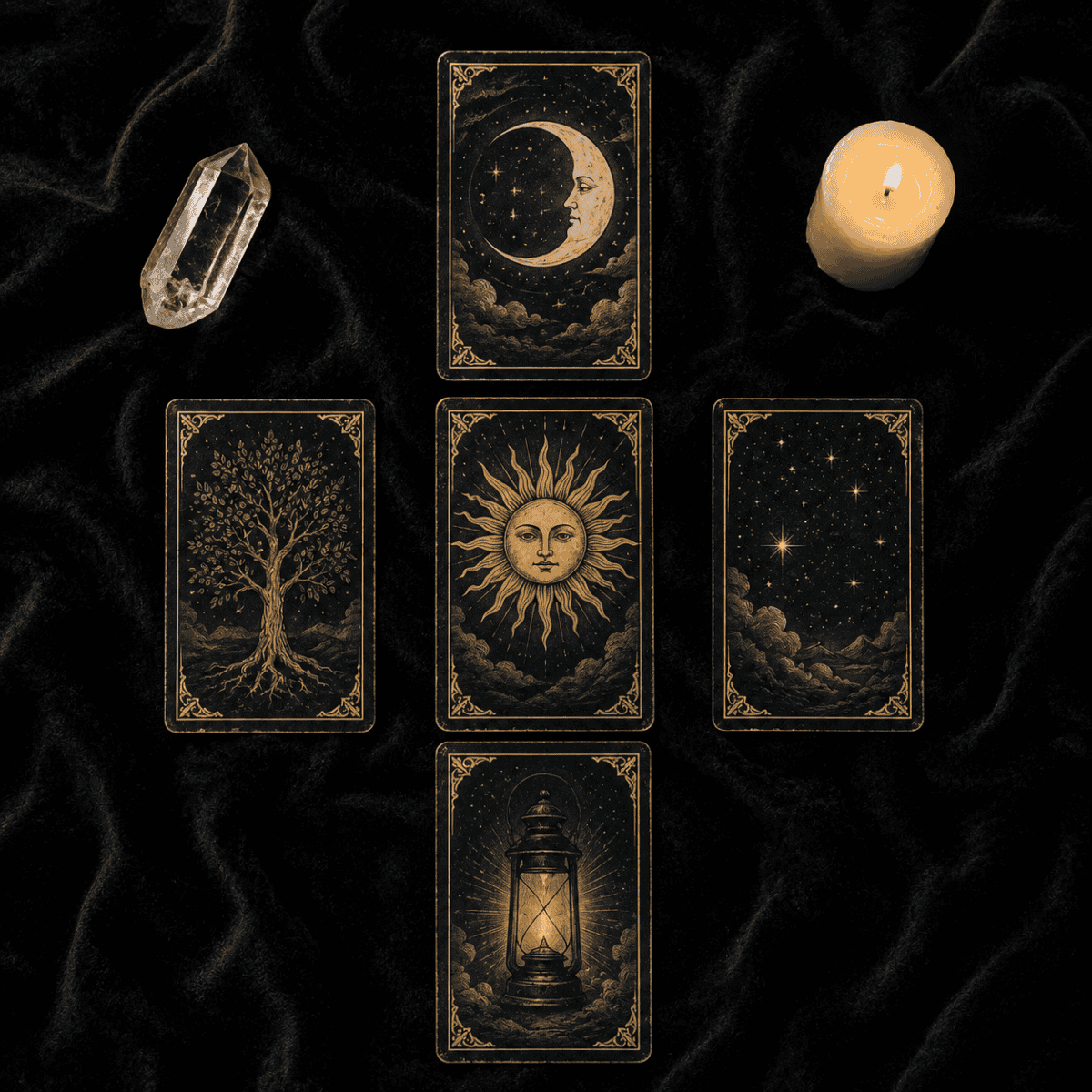
Beginner Tarot: How to Start Reading the Cards
Tarot has a reputation for mystery, but at its core, it’s a tool for reflection. The cards don’t predict a fixed future so much as they hold up a mirror — offering a structured way to explore your subconscious, examine a situation from new angles, and tune into your own intuition. You don’t need psychic ability to start reading tarot. You just need curiosity, a deck, and a willingness to practice.
This guide walks through the basics of tarot, how to choose your first deck, and a handful of beginner-friendly spreads — including a personal favorite that’s become a staple for many readers: the simple cross.
What Is Tarot, Really?
A tarot deck contains 78 cards split into two groups:
The Major Arcana (22 cards) — represent big life themes, turning points, and significant energies. Cards like The Fool, The Tower, or The Star speak to major forces at play in your life.
The Minor Arcana (56 cards) — divided into four suits (Cups, Wands, Swords, and Pentacles), these represent the day-to-day details: emotions, ideas, conflicts, and practical matters. Each suit corresponds loosely to an element — Cups to water and emotion, Wands to fire and passion, Swords to air and intellect, Pentacles to earth and material life.
When you pull a card, you’re not being told a fixed fact about the future. You’re being offered a symbol, and your job as the reader is to interpret how that symbol relates to your question.
Choosing Your First Deck
The classic starting point for most beginners is the Rider-Waite-Smith deck, since most tarot books and guides are written using its imagery and symbolism as the reference point. Once you’re comfortable with the basics, you can branch out into countless other decks — from Thoth-based decks to modern illustrated ones — many of which reinterpret the same core meanings through different art styles.
Historical tarot artwork also shows how card imagery has evolved across different periods and artistic traditions.
When choosing a deck, let yourself be drawn to the artwork. A deck you find visually compelling is one you’ll actually want to pick up and practice with.
Tarot has a long history as both a card game and a symbolic system. For historical context, explore the Metropolitan Museum of Art’s collection and scholarship on early tarot cards.
How to Start Reading
1. Get to Know the Cards Before You Read for Others
Spend time simply flipping through your deck. Pull one card a day and journal your gut reaction to the imagery before looking up the “official” meaning. This builds your intuitive relationship with the cards alongside the traditional interpretations.
You can also record your card pulls, impressions, and interpretations in your Book of Shadows as your practice develops.
2. Ask Open-Ended Questions
Tarot tends to work best with reflective questions rather than yes/no ones. Instead of “Will I get the job?” try “What do I need to understand about this job opportunity?” This invites a more useful, layered answer.
3. Shuffle With Intention
Some readers also incorporate crystals into their reading space as symbols of grounding, intuition, or focus.
As you shuffle, hold your question in mind. Some readers cut the deck into three piles and reassemble them; others simply shuffle until it feels right. There’s no single correct method — trust what feels natural.
4. Start Small
Beginners often feel pressure to memorize elaborate ten-card spreads right away. Start with single-card pulls and simple three-card spreads before working up to more complex layouts.
Beginner-Friendly Tarot Spreads
The One-Card Pull
The simplest spread of all. Ask a question, pull one card, and reflect. This is a great daily practice for building familiarity with the deck without overwhelming yourself.
Use it for: daily guidance, quick check-ins, or a theme for the day.
The Three-Card Spread (Past, Present, Future)
A classic beginner layout. Lay three cards in a row:
- Past — what has led to the current situation
- Present — where things stand right now
- Future — where things are headed if the current path continues
Use it for: general situations, relationship check-ins, or tracking the arc of a specific issue.
Variation: Some readers swap this to Situation / Action / Outcome, which works well for decision-making questions.
The Mind-Body-Spirit Spread
Three cards representing your mental state, physical state, and spiritual state. A great grounding spread for a general check-in on how you’re doing.
Use it for: self-care check-ins, or when you’re not sure what question to even ask.
The Simple Cross (Five-Card Spread)
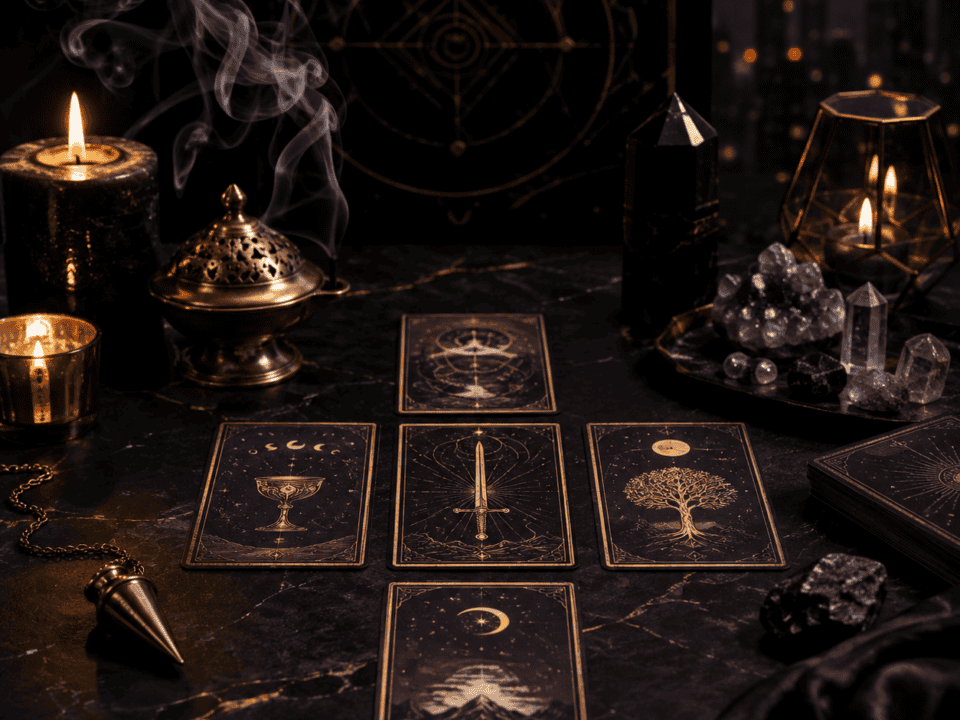
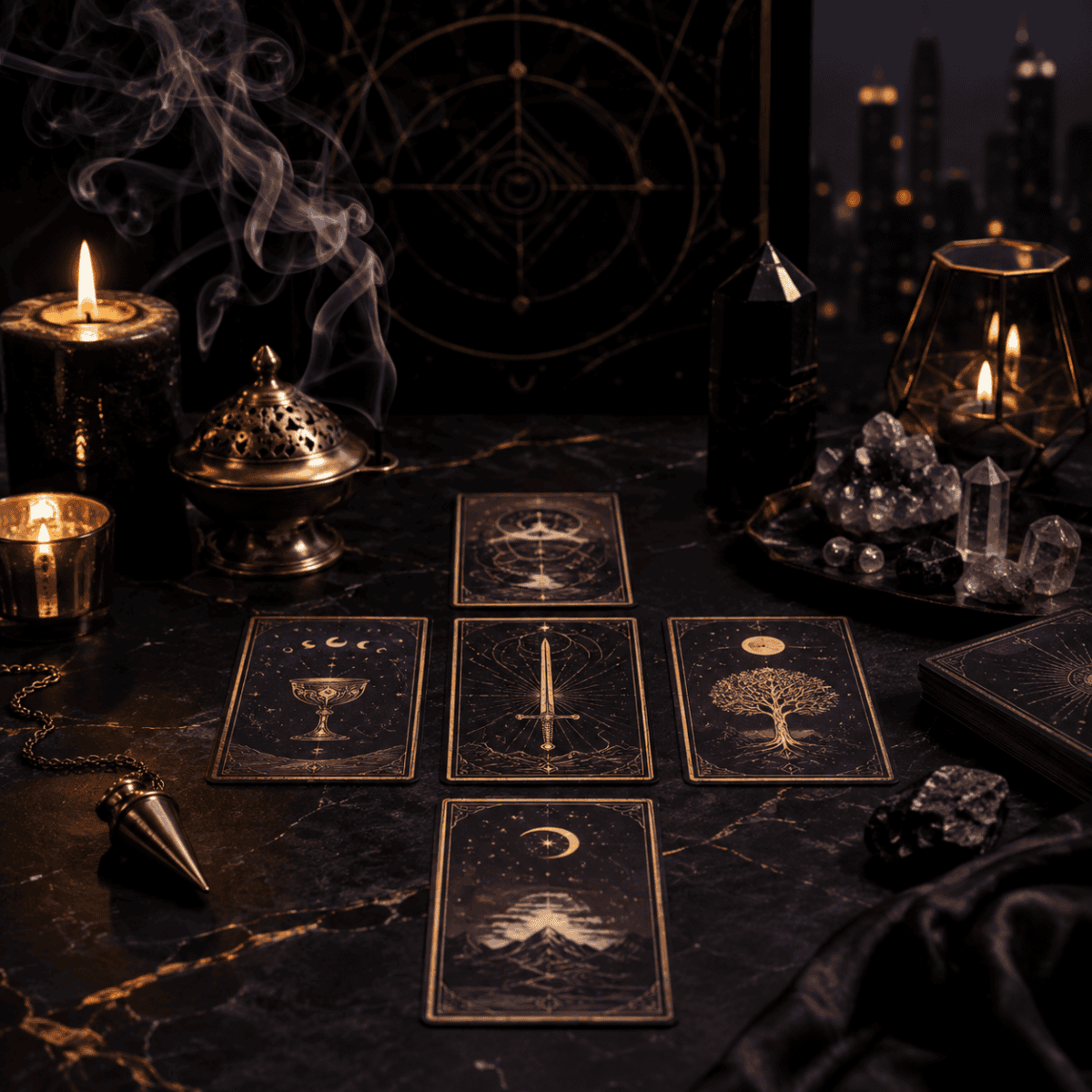
This is a favorite among many readers for good reason — it’s compact, but gives real depth by pulling in the past, present, future, surrounding influences, and a clear answer, all in one layout.
How it’s laid out:
- Past — placed to the left, representing what has led up to the situation
- Present — placed to the right, representing where things currently stand
- Future — placed above, representing where the situation is heading
- Surrounding Energies — placed below, representing outside influences, other people, or underlying factors affecting the situation
- Result / Answer — placed in the center, drawn last and read in light of all four surrounding cards, offering the clearest answer or overall message
Why it works so well for beginners: The cross shape naturally teaches you to read cards in relation to each other rather than in isolation — the center card doesn’t mean much until you’ve absorbed the story the other four are telling. It’s simple enough to memorize quickly, but rich enough to use for real, ongoing questions rather than just quick daily pulls.
Use it for: any specific question where you want a fuller picture — relationships, career decisions, or working through a recurring pattern in your life.
The Celtic Cross (For When You’re Ready to Go Deeper)
Once you’re comfortable with five-card spreads, the traditional ten-card Celtic Cross is the natural next step. It expands on the same past/present/future structure but adds cards for hopes and fears, external influences, and a more detailed outcome. Most beginners find it easier to grow into this spread after practicing something like the simple cross first.
Reversed Cards: Do You Need to Use Them?
Some readers interpret upside-down (reversed) cards as blocked, delayed, or inward versions of the upright meaning. Others choose to read every card upright regardless of orientation, simplifying the practice while they’re learning. There’s no wrong approach — many experienced readers didn’t start using reversals until well into their practice.
Building Your Own Relationship With the Cards
As you grow more comfortable, you’ll likely notice your interpretations diverging slightly from the guidebook definitions — and that’s a good sign, not a mistake. Tarot is ultimately a conversation between the symbolism on the card and your own intuition. The guidebook gives you a vocabulary; your own experience teaches you how to actually speak the language.
Keeping a tarot journal — noting which cards you pulled, your interpretation, and how things unfolded afterward — is one of the fastest ways to deepen your practice and start trusting your own reads.
Final Thoughts
Tarot doesn’t require special gifts, just consistent practice and a willingness to sit with symbolism and reflect honestly. Start small with single-card pulls, work your way into three-card spreads, and when you’re ready for something with more depth, a five-card cross spread — past, present, future, surrounding energies, and a clear result in the center — offers one of the most satisfying beginner-to-intermediate layouts you can learn. From there, the deck becomes less of a mystery and more of a familiar companion.
Shop the Practice
If this resonated, the Beginner Tarot Cheat Sheet is a great companion for going deeper.