Beginner Tarot: How to Start Reading the Cards
August 13, 2026
What Is Modern Witchcraft?
If you’ve found yourself drawn to moon phases, herbal remedies, tarot cards, or the simple act of lighting a candle with intention, you may already be closer to witchcraft than you realize. Modern witchcraft isn’t about pointed hats or cauldrons — it’s a living, evolving practice that blends ancient folk traditions with personal spirituality, mindfulness, and a deep respect for the natural world.
This guide is for anyone curious about what modern witchcraft actually is, and how to begin building a practice that feels authentic to you.
You also don’t need a fully formed spiritual worldview before you start. Some practitioners are deeply spiritual or pagan; others treat their practice as a secular, grounding ritual for processing emotions and marking time. You can begin as a skeptic and let your beliefs evolve, or never fully resolve them at all — what matters is that the practice feels honest to you, not performative.
What Modern Witchcraft Really Means
At its core, witchcraft is the practice of working with natural energies — the cycles of the moon, the seasons, herbs, crystals, and intention — to create change in your life. It’s less a religion and more a toolkit, one that people from all backgrounds and belief systems adapt to fit their own worldview.
Some practitioners identify as Wiccan, following a structured religious framework with deities, sabbats, and covens. Others practice what’s often called “secular” or “eclectic” witchcraft, pulling from folklore, psychology, and ritual without any specific religious attachment. There’s no single “correct” way to be a witch. The common thread is intention: the belief that focused will, symbolic action, and attention to natural rhythms can shape your inner and outer life.
Common Threads Across Modern Practices
While every practitioner’s path looks different, a few elements show up again and again:
Working with the moon. Many witches track lunar phases — new moon for setting intentions, full moon for release and manifestation, waning moon for banishing what no longer serves you.
Herbalism and plant magic. Using herbs, teas, and plants for their traditional folkloric associations (lavender for calm, rosemary for protection, bay leaves for wishes) bridges the line between kitchen witchery and old-world folk remedies.
Tarot and divination. Cards, pendulums, and scrying are tools for reflection and intuition-building rather than fortune-telling in the Hollywood sense.
Ritual and intention-setting. This can be as elaborate as a full moon ceremony with candles and incense, or as simple as pausing before your morning coffee to set an intention for the day.
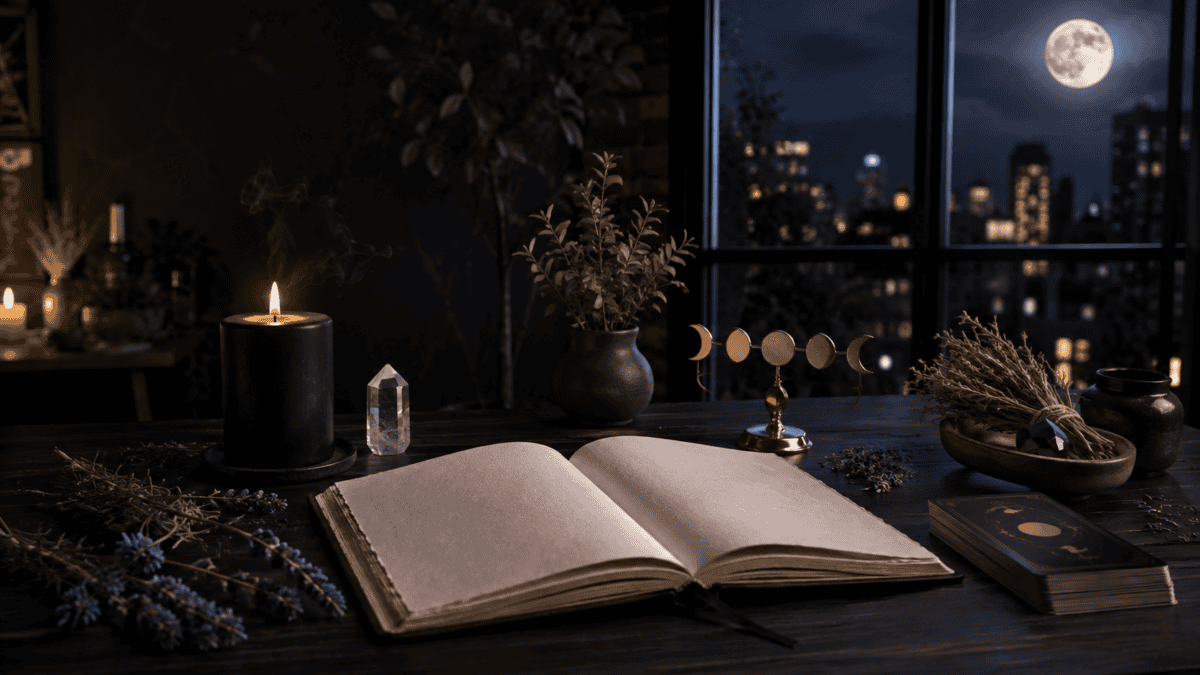
Altars and sacred space. A dedicated corner, shelf, or box where meaningful objects — stones, candles, photographs, dried flowers — anchor your practice physically.
How to Start Building Your Own Practice
1. Start With Curiosity, Not Rules
You don’t need to buy a grimoire or memorize correspondences before you begin. Start by noticing what already draws you in — is it the quiet ritual of tea-making, the pull of a full moon, the comfort of a particular scent? Your practice can grow from what already feels sacred to you.
2. Keep a Book of Shadows or Journal
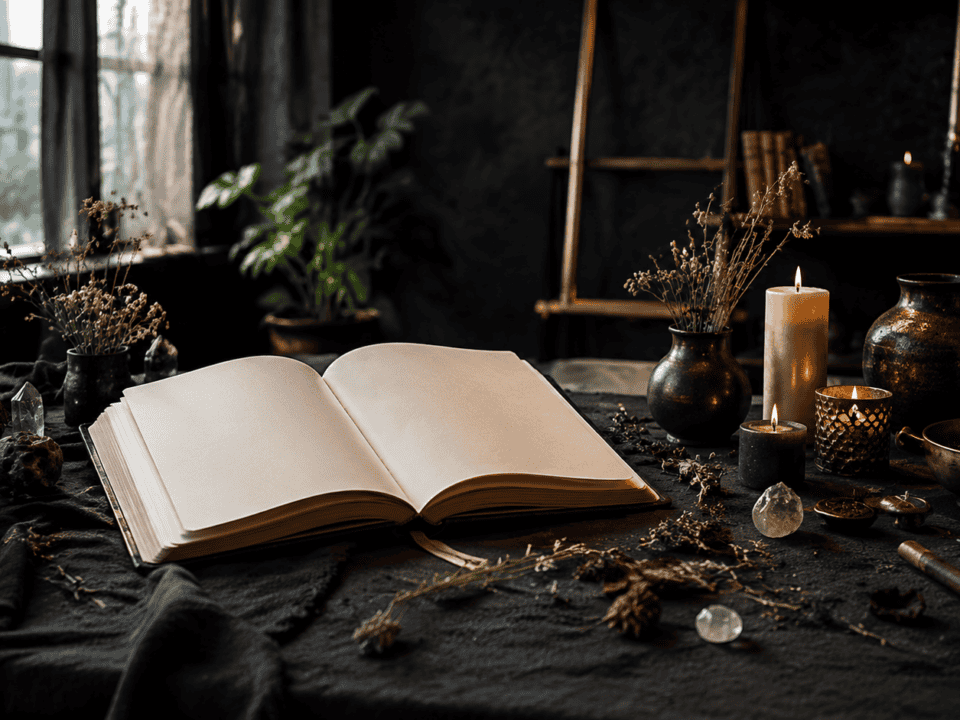
A simple notebook where you record moon phases, herbal notes, dreams, and reflections becomes the backbone of your practice over time. This is traditionally called a “Book of Shadows,” but it can be as informal as a journal you keep on your nightstand.
3. Learn the Wheel of the Year
Many practitioners orient their practice around the eight seasonal sabbats — Samhain, Yule, Imbolc, Ostara, Beltane, Litha, Lughnasadh, and Mabon. You don’t have to celebrate all of them, but understanding the wheel gives your practice a natural rhythm tied to the changing seasons. See the full Wheel of the Year guide for dates and themes, or its lunar counterpart in Moon Magic.
4. Build a Small Altar
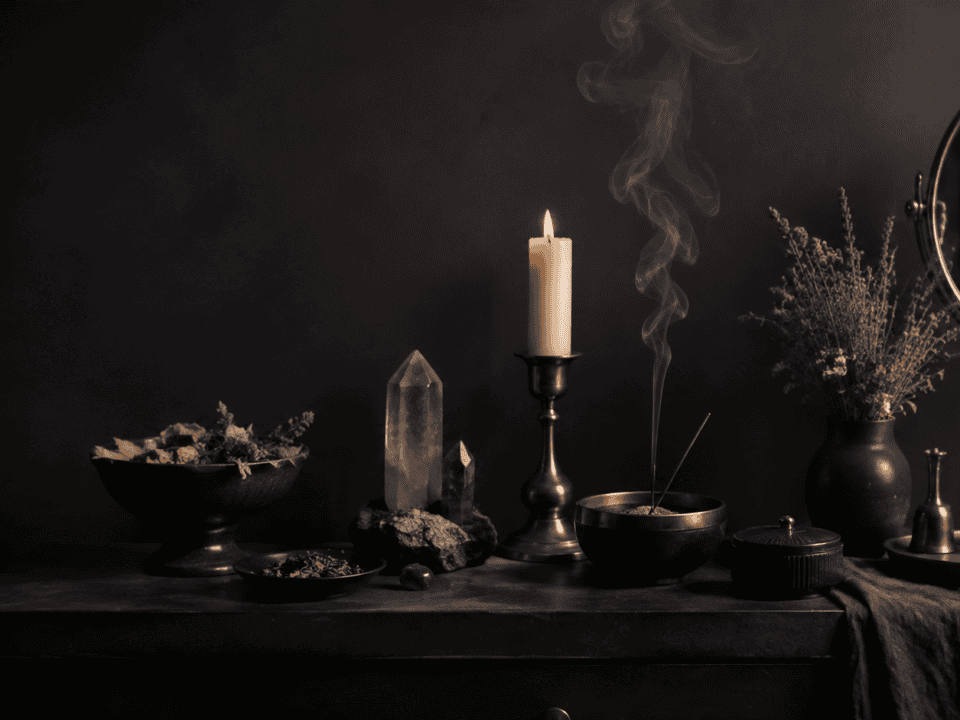
Choose a space — a windowsill, a shelf, a small table — and place a few meaningful objects there: a candle, a stone you found somewhere memorable, a photo, dried herbs. This becomes a physical touchstone for your intentions.
5. Experiment With One Tool at a Time
Rather than overwhelming yourself with tarot, crystals, herbalism, and candle magic all at once, pick one practice to explore deeply. Learn it, sit with it, let it teach you before moving to the next.
6. Trust Intuition Over Rigid Rules
Modern witchcraft, especially outside formal traditions like Wicca, tends to prioritize personal resonance over strict correspondences. If a book tells you rose quartz means love, but you feel a different connection to it, trust your own experience.
7. Connect With Community — At Your Own Pace
Online forums, local metaphysical shops, and witchcraft-focused social media spaces can offer support and shared knowledge. But solitary practice is just as valid; you don’t need a coven to be a witch.
A Note on Respect and Cultural Roots
Modern witchcraft draws from many folk traditions — European, Appalachian, Hoodoo, curanderismo, and more — each with distinct histories and lineages. As you build your practice, it’s worth researching the origins of the traditions you’re drawn to, giving credit where it’s due, and being mindful about practices that come from closed cultural or spiritual systems not your own.
Final Thoughts
Modern witchcraft is ultimately a practice of paying attention — to the moon, to the seasons, to your own intuition, and to the quiet magic already present in everyday life. There’s no single entry point, no required toolkit, and no test to pass. The practice reveals itself the more you show up for it, one candle, one journal entry, one full moon at a time.
Whether you end up identifying as a witch, a folk practitioner, or simply someone who lights a candle with intention now and then, the real work is the same: building a relationship with the natural world and with yourself.
research on spirituality among Americans from the Pew Research Center
historical witchcraft resources from the Library of Congress
explore the UrbanJoy Book of Shadows
learn more about crystals and their traditional uses
Shop the Practice
If this resonated, the Complete Book of Shadows is a great companion for going deeper.



5 Comments
[…] you’re earlier on your own path than I was back then, What Is Modern Witchcraft? is a gentle place to start. This is simply the story of how I found my own way […]
[…] still working out what modern witchcraft even means to you before picking practices, our beginner’s guide to modern witchcraft is a good place to […]
[…] marking the harvest and the equinox, and a relatively young name for it that modern Witchcraft and Wheel of the Year practice adopted to give the day its own identity alongside Ostara, Litha, and the other seven […]
[…] also began learning more about modern witchcraft and building a personal spiritual practice. I discovered that there was no single perfect way to practice. My rituals did not need to look […]
[…] is part of what I appreciate about building a personal spiritual practice. A practice does not have to follow someone else’s rigid rules. It can grow from what genuinely […]