7 Modern Witchcraft Practices for Everyday Life
September 7, 2026
Essential Oil Dilution Guide: How to Dilute Oils Safely for Ritual Use
September 7, 2026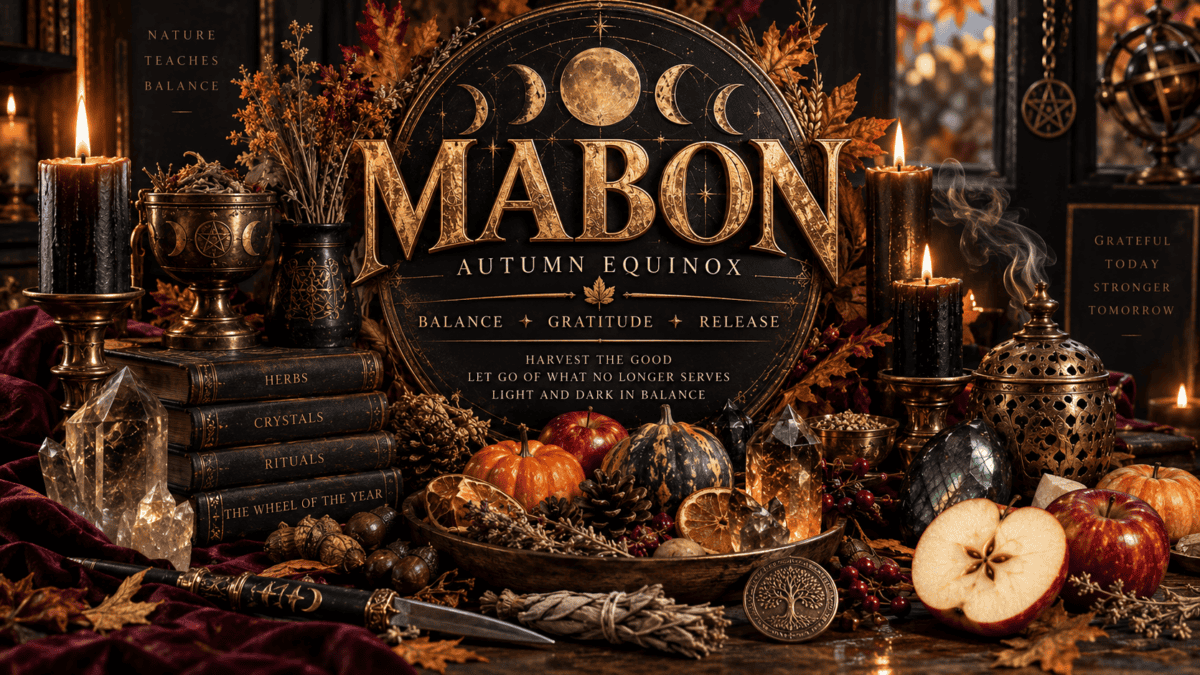
Mabon marks the moment the Wheel of the Year tips into darkness: daylight and night stand equal for one breath, then the nights start winning. It’s the witch’s Thanksgiving — a pause to count what the year has given you, finish what still needs finishing, and get honest about what you’re ready to let go of before winter closes in. This guide covers everything you need to observe it, even if this is your very first sabbat.
What Mabon Means
Mabon (pronounced MAY-bon or MAH-bon) is the modern Pagan and Wiccan name for the autumn equinox, the second of the year’s three harvest festivals — after Lughnasadh and before Samhain. Where Lughnasadh celebrates the first grain harvest and Samhain marks the final one, Mabon sits in the middle: the fruit and vegetable harvest, the point of balance, the exhale before the descent into the dark half of the year.
At its core, Mabon is about equilibrium and gratitude. Light and dark are in perfect balance on this day, which makes it a natural time for reflection: what’s in balance in your own life, and what isn’t? What have you harvested this year — literally or otherwise — and what are you still holding onto that it’s time to release?
A Short History of Mabon
Autumn equinox celebrations are ancient and cross-cultural — from Greek harvest rites for Demeter and Persephone to the Chinese Mid-Autumn Festival to Christian Harvest Home traditions in the British Isles. The name “Mabon” itself, though, is much newer. It was coined in the early 1970s by Aidan Kelly, an American Pagan writer, who named the sabbat after Mabon ap Modron, a son-of-the-mother figure from Welsh mythology associated with imprisonment and rescue — a fitting echo of the year’s light being “captured” by the coming dark.
So when you celebrate Mabon, you’re taking part in two overlapping traditions: the genuinely ancient practice of marking the harvest and the equinox, and a relatively young name for it that modern Witchcraft and Wheel of the Year practice adopted to give the day its own identity alongside Ostara, Litha, and the other seven sabbats.
When Is Mabon?
Mabon falls on the autumn equinox, which lands between September 21st and 24th each year depending on the Earth’s orbit — it isn’t a fixed calendar date the way Samhain (October 31st) or Beltane (May 1st) are. In 2026, the autumn equinox — and Mabon — falls on Tuesday, September 22nd. If you’re in the Southern Hemisphere, your seasons are flipped: this same equinox marks your spring, and your Mabon-equivalent harvest sabbat falls around the March equinox instead.
You don’t have to celebrate on the exact date. Many practitioners mark it on the closest weekend, or observe it any evening that week — what matters more than precision is taking the time at all.
Mabon Correspondences at a Glance
- Colors: burnt orange, deep red, brown, gold, dark green, russet
- Herbs: sage, rosemary, thyme, marigold, mugwort, oak leaves, dried corn husks
- Scents: clove, cinnamon, patchouli, sandalwood, apple, pine, myrrh
- Crystals: citrine, carnelian, tiger’s eye, smoky quartz, moss agate, amber
- Foods: apples, squash, root vegetables, bread, nuts, cider, late-season grapes
- Symbols: cornucopia, pinecones, wheat sheaves, apples, acorns, gourds
- Deities often honored: Demeter, Persephone, Mabon ap Modron, Pomona, the Green Man
Think of this list as a starting palette, not a checklist — you don’t need all of it, or even most of it, for a Mabon practice to count.
Colors of Mabon
Mabon’s palette is the same one nature is already wearing: burnt orange, deep red, ochre, brown, and the last stubborn green of late summer. Bringing these colors into your space — a scarf, a candle, a bowl of seasonal produce — is one of the simplest, lowest-effort ways to acknowledge the sabbat if you’re short on time or supplies.
Herbs for Mabon
Sage and rosemary are Mabon staples — both are associated with wisdom, protection, and clearing out what no longer serves, which fits the sabbat’s “release before winter” theme perfectly. Marigold and mugwort lean into the harvest and divination side of the season, while dried corn husks or a few stalks of wheat make an easy, literal nod to the grain harvest on an altar or door.
Scents for Mabon
Warm, spiced, and a little smoky is the Mabon mood: clove, cinnamon, patchouli, sandalwood, and baked apple. A simmer pot of apple peels, cinnamon sticks, and cloves on the stove is an easy way to scent a whole room without candles or incense, and it works well as the backdrop for the ritual below.
Crystals for Mabon
Citrine and carnelian carry the last warmth of summer and support abundance and confidence heading into a leaner season. Tiger’s eye and amber ground that energy in practicality — useful if your Mabon reflection turns up some hard truths about where your time or energy went this year. Smoky quartz and moss agate round things out with grounding and a gentle release of what’s no longer useful. As with all crystal work, treat these as supportive tools for reflection rather than guarantees — see our safety disclaimer for more on how we frame crystal correspondences, plus notes on keeping small stones away from children and pets, and read our crystals guide if you’re building out a collection.
Building a Mabon Altar
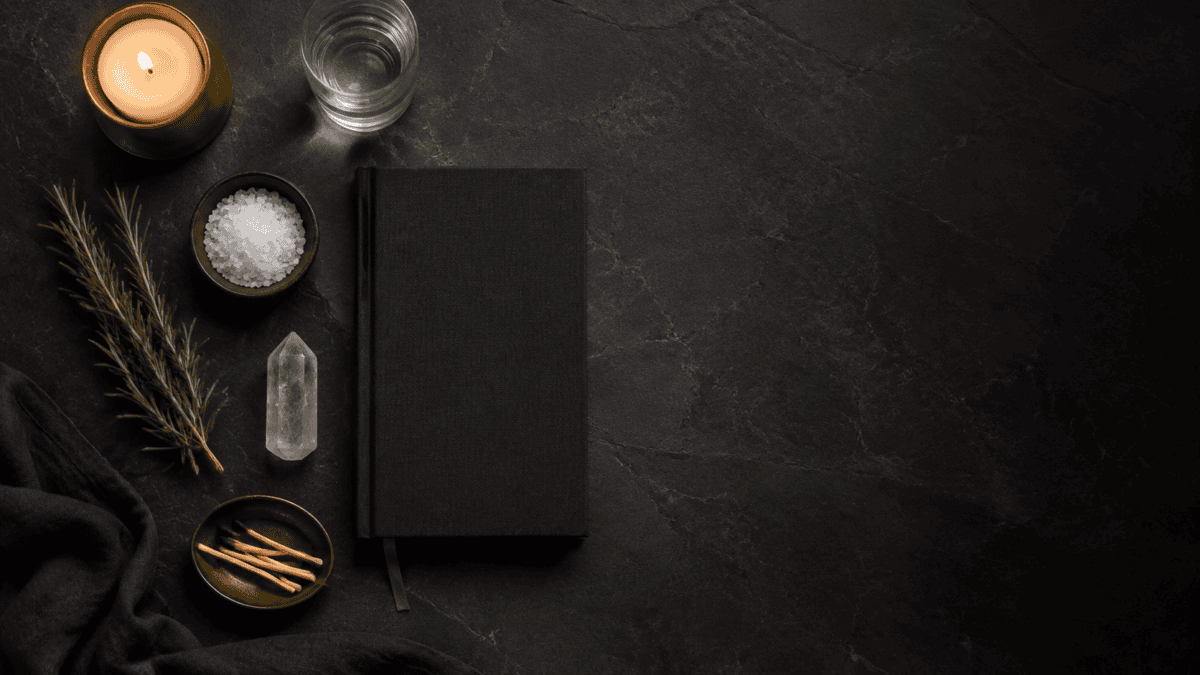
A Mabon altar can be as small as a windowsill. A few ideas to pull from, not a required list:
- A small basket or bowl of apples, squash, or other seasonal produce
- A candle in orange, red, brown, or gold
- A few fallen leaves, acorns, or pinecones from a walk outside
- Dried herbs like sage, rosemary, or wheat stalks tied with twine
- One or two Mabon crystals — citrine or carnelian are an easy starting pair
- A small notebook for the journal prompts below
- A written or printed list of what you’re grateful for this year, and what you’re ready to release
If you don’t have a dedicated altar space yet, our guide to building your first simple altar and our witchcraft tools for beginners page both cover how to start one from scratch with things you likely already own.
A Simple Beginner’s Mabon Ritual
This ritual takes about fifteen minutes and needs nothing you can’t easily find: a candle, a piece of paper, and something small from the harvest — an apple works well.
- Set the space. Light your candle and take a few slow breaths. If you’re using a simmer pot or incense, start it now.
- Acknowledge the balance. Say, aloud or silently: “Today, light and dark stand equal. I pause here, between what has been and what is coming.”
- Name your harvest. On your paper, write down three things you’ve “harvested” this year — a finished project, a repaired relationship, a habit you built, anything real. Read them back to yourself.
- Name your release. On the same paper, write down one thing you’re ready to let go of before the dark half of the year begins — a grudge, a habit, a fear, an obligation that’s run its course.
- Eat the apple. Slice it in half crosswise to reveal the five-pointed star inside the core — a small, quiet nod to the season’s magic. Eat a piece slowly, as a simple act of gratitude for the harvest.
- Close. Blow out the candle and say: “I release what I no longer need, and I carry my harvest forward with me.” Keep the paper on your altar until Samhain, then burn or bury the “release” line when you’re ready.
As always, treat any candle work with basic fire safety — never leave a burning candle unattended — and see our safety disclaimer for more on candles, smoke, and fire safety.
Mabon Journal Prompts
If ritual isn’t your style, or you want to go deeper afterward, sit with a few of these:
- What did I “plant” earlier this year that I’m now harvesting the results of?
- Where in my life do I feel balanced right now? Where do I feel out of balance?
- What am I genuinely grateful for this year, even if the year was hard?
- What am I ready to release before the darker months set in?
- What does “enough” look like for me right now — enough rest, enough work, enough stuff?
- If this season is an ending, what is it making room for?
Our full moon journaling ritual pairs well with these prompts if you want to build reflection into a regular practice rather than a once-a-year check-in.
Keep Exploring
Mabon is one stop on the Wheel of the Year — if you’re new to the sabbats or modern practice in general, start with our beginner’s guide to modern witchcraft. For more on the tools and correspondences touched on here, see our guides to crystals, candle magic, and witchcraft tools for beginners. Every practice on this site is offered for reflection and personal growth — read our full metaphysical and safety disclaimer before working with candles, herbs, or crystals.