
Dowsing Rods: History, Meaning and How I Use Them
September 7, 2026
Modern Witchcraft Supplies: What Beginners Actually Need
September 11, 2026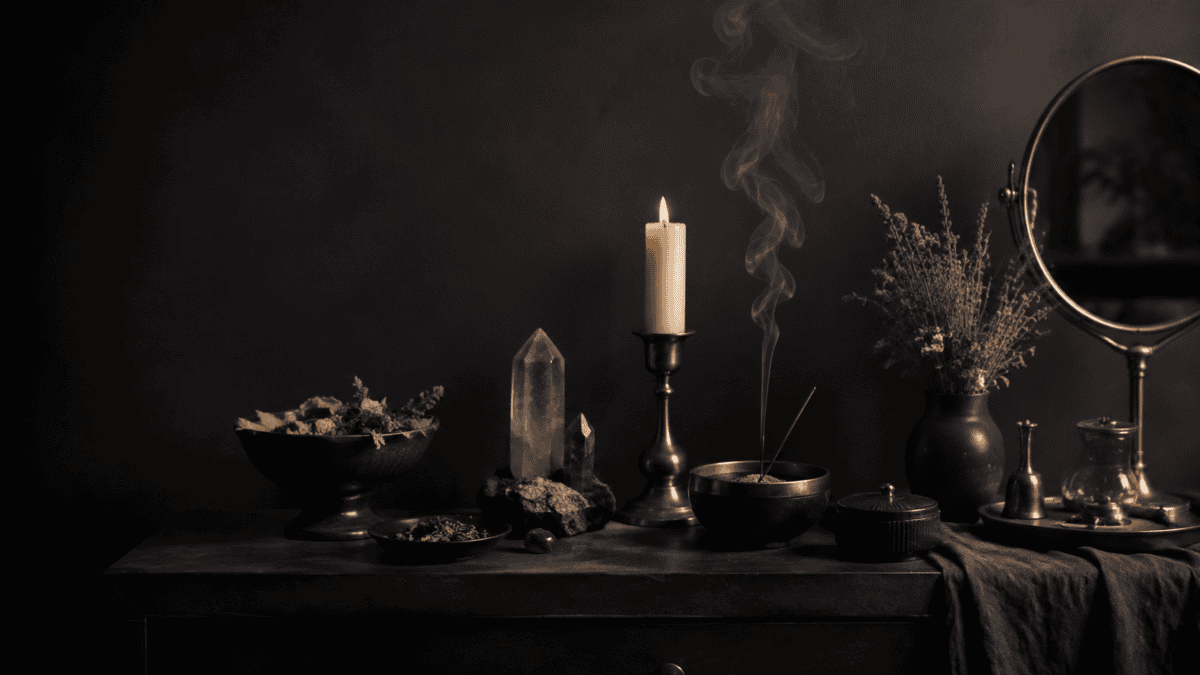
A modern witchcraft altar is one of the most recognizable images of the craft, and also one of the most misunderstood. It’s not a stage prop or a shrine you have to get ‘right’ on the first try — it’s a working surface, a physical anchor for your intentions, and it should evolve as you do. Here’s how to build one that actually serves your practice instead of just looking good in photos.
What an Altar Is Actually For
An altar gives your practice a home base — a spot where meaningful objects live together and where you go when you want to slow down and be intentional. It signals to your own mind: this is ritual time, not scrolling time. That psychological shift is most of what an altar does, regardless of what tradition you follow or don’t.
Do You Even Need One?
No. Plenty of modern witches practice without a dedicated altar at all, especially if space, privacy, or living situation makes one impractical. If the idea genuinely appeals to you, build one. If it feels like an obligation you’re checking off because you saw it online, skip it — your candle can live in a drawer between rituals just fine.
Choosing a Location
A dresser top, a windowsill, a shelf, or even a shoebox you keep in a closet and pull out when needed all work. Prioritize a spot that’s realistically safe for an open flame if you use candles, and one you’ll actually walk past or open regularly — an altar buried in a closet you never open won’t get used.
Core Elements to Consider
You don’t need to represent every classical element, but many witches find it grounding to include a nod to each — something that feels like earth (a stone or plant), air (incense, a feather, or simply an open window nearby), fire (a candle), and water (a small dish or cup). Beyond that, add a couple of personally meaningful objects: a photo, a written intention, a gift from someone important, or an object tied to a specific goal you’re working toward.
- Earth: a stone, crystal, or small potted plant
- Air: incense, a feather, or simply proximity to a window
- Fire: a candle (even a battery-operated one works)
- Water: a small dish, cup, or shell
- Personal: photos, written intentions, meaningful trinkets
Personalizing It Beyond the Basics
The most powerful altars aren’t the most elaborate ones — they’re the most personal. A ticket stub from a turning-point night. A stone from a place you needed to leave behind. A card from someone who believed in you before you believed in yourself. These objects carry more genuine charge than anything bought specifically to look witchy.
Small-Space and Renter-Friendly Altars
If you’re working with a shared apartment, a dorm, or a single room, scale down rather than skip it entirely. A small tray on a bookshelf, the top of a nightstand, or a fold-out setup you assemble for ritual time and pack away afterward all count as legitimate altars. Battery-operated candles solve both the fire-safety and roommate-visibility problem at once.
Keeping It Maintained
Dust it, refresh wilted plants, and periodically ask whether every object on it still means something to you. An altar that accumulates clutter from objects you’ve outgrown starts to feel stagnant rather than sacred. Treat it the way you’d treat any space that’s supposed to reflect where you are now, not where you were a year ago. A modern witchcraft altar works best when it’s allowed to keep changing.